
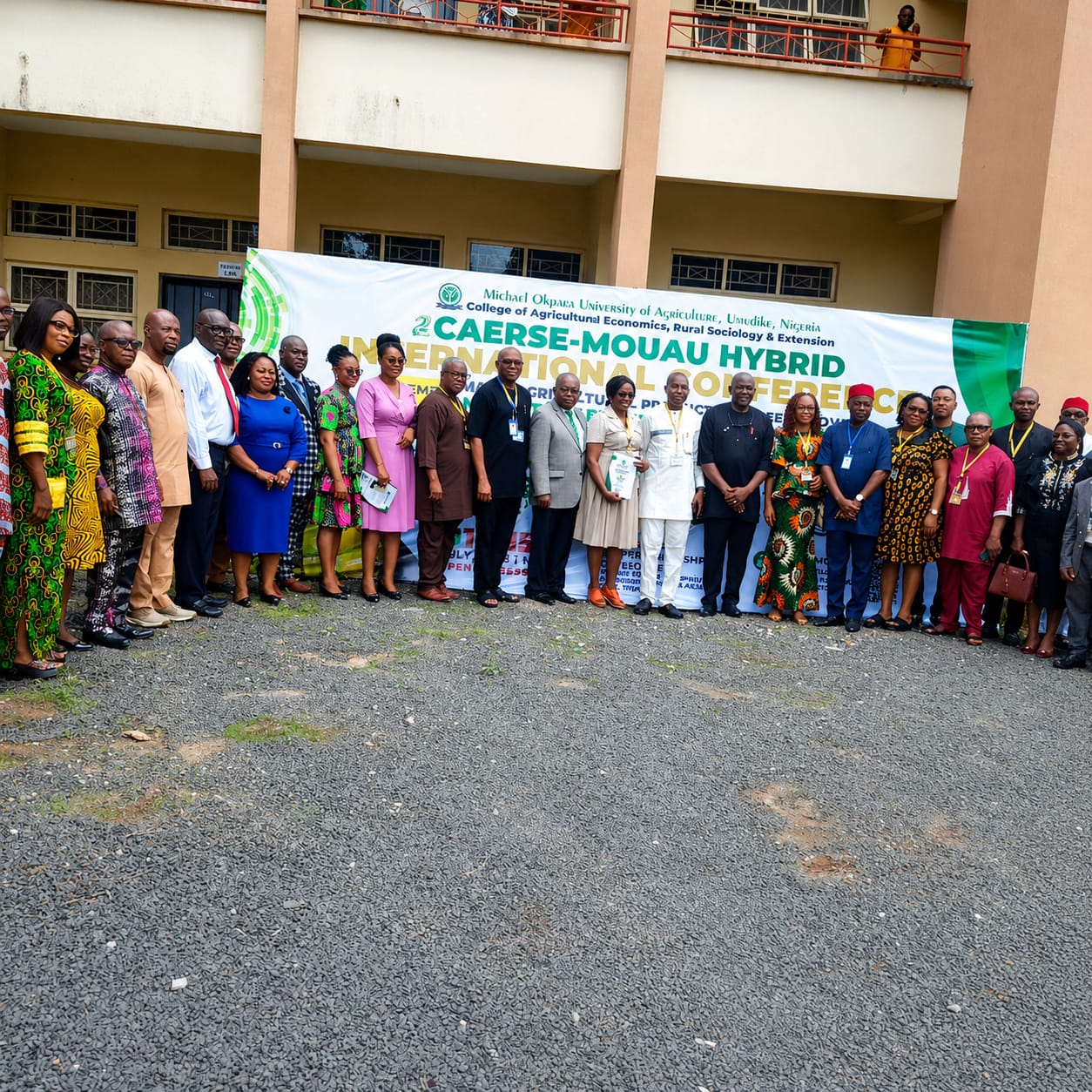

Stakeholders at the Second International Conference of the College of Agricultural Economics, Rural Sociology and Extension (CAERSE), Michael Okpara University of Agriculture, Umudike (MOUAU), have called for the accelerated adoption of smart agricultural technologies, responsible artificial intelligence (AI) and stronger multi-sector partnerships to enhance food security and sustainable agricultural development in Nigeria.
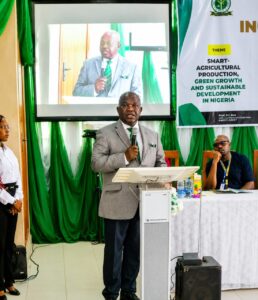
The two-day conference, held at the Centre for Entrepreneurship Development (CED), Umudike, was themed “Smart Agricultural Production, Green Growth and Sustainable Development in Nigeria.” It attracted academics, researchers, policymakers, extension professionals and industry players to explore innovative strategies for addressing Nigeria’s growing food security challenges.
Declaring the conference open, the Vice-Chancellor of MOUAU, Prof. Ursula Ngozi Akanwa, represented by the Deputy Vice-Chancellor (Academic), Prof. Nneoma Elechi Obasi, described the conference theme as both timely and relevant. She said digital technologies and smart agricultural practices remain indispensable for increasing food production, protecting the environment and ensuring long-term agricultural sustainability. She reaffirmed the university’s commitment to advancing research, teaching and extension through collaboration and capacity development.
In his virtual keynote address, the Executive Director of the African Technology Policy Studies Network (ATPS), Prof. Nicholas Ozor, described artificial intelligence as a game-changing technology with enormous potential to improve crop and livestock production, weather prediction and market intelligence. He, however, stressed the need for Africa to develop ethical and locally driven AI solutions, noting that poor infrastructure, weak internet connectivity, inadequate data and low digital literacy continue to limit its widespread adoption.
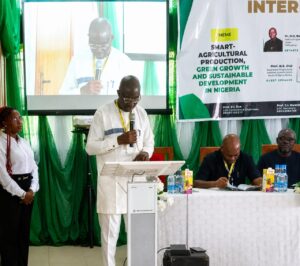
Presenting the lead paper, former Vice-Chancellor of the Federal University, Ndufu-Alike, Prof. Chinedum Uzoma Nwajiuba, urged stakeholders to promote inclusive and practical innovations that respond directly to farmers’ needs. He identified insecurity, poor infrastructure, weak extension services and inconsistent government policies as major constraints to agricultural development, while noting that climate-smart agriculture and AI are gaining increasing relevance in agricultural research.
Also speaking, the Director of Extension Services at the National Root Crops Research Institute (NRCRI), Umudike, Dr. Benjamen Chukwuemeka Okoye, advocated stronger collaboration among researchers, farmers, extension workers, government and the private sector to ensure agricultural innovations are affordable, accessible and beneficial to smallholder farmers, particularly women.
A member of the Governing Council of Ebonyi State University, Abakaliki, Dr. David O. Nwachukwu, said the responsible application of artificial intelligence and digital technologies could significantly improve agricultural productivity and national food security. He called for enabling policies, improved digital infrastructure, enhanced capacity building and closer collaboration among government, researchers, industry and farming communities.
Earlier, the Dean of CAERSE, Prof. Nnanna M. Agwu, described the conference as a timely response to the challenges posed by climate change, population growth and food insecurity. He warned that an estimated 36.2 million Nigerians could face acute food insecurity in 2026, while food demand is projected to increase by more than 50 per cent by 2050, stressing the need for greater investment in smart agriculture and sustainable food production systems.
The conference featured technical sessions coordinated by the Deputy Dean of CAERSE, Dr. Blessing Ada Ahamefule, with discussions centred on smart agriculture, climate resilience, artificial intelligence and sustainable development. Participants unanimously urged governments, development partners and the private sector to increase investment in science, technology and innovation as critical drivers of food security, green growth and sustainable development in Nigeria.
Copyright © EaglesWatchOnline 2023 All rights reserved.
This material, and other digital content on this website, may not be reproduced, published, broadcast, rewritten or redistributed in whole or in part without written permission from EaglesWatchOnline.
