
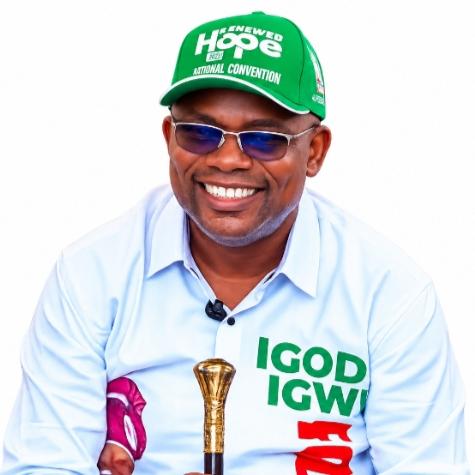
Erondu: Taking Abia South’s Development Agenda To The Senate In 2027
Abia South's Infrastructure, Healthcare, Education and Economic Gaps in Focus

As political activities ahead of the 2027 general elections continue to shape conversations across Abia South Senatorial District, the public-service journey of Erondu Uchenna Erondu Jnr., Esq., has become part of the discussion surrounding the forthcoming senatorial contest.
The All Progressives Congress (APC) senatorial candidate for Abia South, Erondu Uchenna Erondu Jnr Esq, has a career spanning grassroots administration, public-sector engagement, legislative service, sports administration and community development.

Abia South APC Senatorial Candidate
His journey in public service dates back to 2003, when he served as the Chairman of Obingwa Local Government Area of Abia State. He subsequently served as Personal Assistant to the then Deputy Governor of Abia State, H.E. Dr. Chris Alozie Akomas, between 2007 and 2010, and later as Senior Special Assistant and Special Adviser on General Duties to former Governor, H.E. Okezie Victor Ikpeazu between 2015 and 2022.
In 2023, Erondu was elected to represent Obingwa-West State Constituency in the Abia State House of Assembly. He currently serves as Chairman of the House Committee on Public Service Matters, with legislative responsibilities relating to public administration and governance.
One of the legislative initiatives associated with him is the Corporate Social Responsibility Agency Bill, H.A.B. 24 of 2025, which seeks to establish a framework encouraging companies operating in Abia State to contribute more systematically to the development of their host communities.
His legislative engagements have also included issues relating to consumer protection and electricity tariffs, reflecting the role of the legislature in addressing concerns affecting households and businesses.
Beyond government and legislative responsibilities, Erondu has been associated with community interventions in education, healthcare, agriculture, housing and economic empowerment.
His educational support initiatives include a free JAMB registration programme, reportedly benefiting more than 6,000 candidates across six editions, alongside WAEC sponsorship and other educational interventions.
In economic empowerment, his programmes have featured the distribution of motorcycles, minibuses, vehicles, generators, computers, agricultural equipment and other business-support items.
His agricultural interventions have included fertiliser distribution to farmers, while his housing initiatives have reportedly facilitated the construction and furnishing of more than 43 bungalows for indigent families.
Healthcare has also featured prominently in his community development activities. Among the reported interventions is the donation of medical equipment, including dialysis machines, incubators, oxygen concentrators, patient monitors and other medical supplies to healthcare facilities.
His involvement in sports administration is another aspect of his public profile. Between 2004 and 2005, he served as a Director on the management board of Enyimba International Football Club, Aba, during a period associated with the club’s continental achievements.
Beyond individual interventions and political activities, Abia South continues to face development questions that require sustained public attention, institutional engagement and long-term planning.
One major concern is infrastructure. Road connectivity remains central to the movement of people, agricultural produce and manufactured goods across the district. The condition of important road networks, particularly connections between urban commercial centres and rural communities, affects transportation costs, trade and access to essential services.
For Aba, the challenge extends beyond road construction to include electricity, drainage, water supply, waste management and the infrastructure required to support its commercial and industrial activities. In Ukwa East and Ukwa West, improved roads, bridges and rural infrastructure are important to connecting communities, farms and economic activities.
Electricity is another critical issue, especially in Ukwa-East LGA who has been off the national grid for over a decade now as well as their neighbour, Ukwa-West among other LGAs.
Manufacturers, artisans, traders and small businesses in Aba and its suburbs require more reliable and affordable power to remain productive and competitive. The high cost of alternative power sources places additional pressure on businesses, particularly small-scale manufacturers.
Healthcare infrastructure also requires attention. Access to specialist services, modern diagnostic facilities, adequately equipped hospitals and trained medical personnel remains an important development priority. The case for a federal specialist or tertiary healthcare institution in Aba is therefore an issue that can be pursued through engagement with the Federal Government and relevant health institutions.
Education presents another area for sustained intervention. Beyond access to primary and secondary education, young people require opportunities for higher education, technical training, vocational development and digital skills. A stronger federal educational presence in Abia South, including advocacy for a federal university, polytechnic or specialised skills institution, could form part of a broader discussion about educational access and workforce development.
The economic future of Aba is equally important. As a major commercial and manufacturing centre, the city has the capacity to support employment, entrepreneurship and export-oriented production. However, businesses require access to finance, modern production technology, improved market infrastructure, product certification, wider distribution networks and opportunities to reach national and international markets.
The development concerns of Ukwa East and Ukwa West also deserve particular attention. As oil-producing areas, their communities have legitimate interests in infrastructure, environmental protection, employment, social investment and transparent engagement with relevant development institutions. The benefits of economic activities in the area should translate into visible improvements in the living conditions of host communities.
Agriculture offers another opportunity. With appropriate investment in farm support, storage, processing, transportation and market access, agricultural production can contribute more significantly to household income, food security and employment across the district.
Access to potable water, effective drainage, sanitation and environmental management must also feature in any comprehensive development conversation, particularly in communities where these services remain inadequate.
The Senate does not directly execute roads, construct hospitals or operate power infrastructure. Those responsibilities largely rest with the relevant executive institutions and agencies. However, a senator can play an important role through lawmaking, oversight, budgetary participation, constituency representation and sustained engagement with federal ministries and development agencies.
For Erondu, the development agenda being associated with his senatorial aspiration includes advocating for priority federal road projects, improved electricity infrastructure and stronger federal investment in healthcare and education.
In healthcare, this could involve pursuing the establishment of a federal specialist hospital in Aba, while supporting interventions that improve existing medical facilities and access to specialist services.
In education, he could engage relevant federal institutions on the possibility of expanding tertiary educational opportunities in Abia South, while promoting technical and vocational training centres that prepare young people for employment in manufacturing, technology and other productive sectors.
For Aba’s commercial community, a proposed annual Aba Trade and Industrial Exhibition could provide a platform for manufacturers, traders, investors and development partners to showcase products, establish business relationships and explore new markets. Such an initiative could be complemented by engagement with relevant federal agencies on product standards, export development, access to finance and industrial support.
The Made-in-Aba economy could also benefit from initiatives that connect local manufacturers to modern technology, improved production facilities, skills development and wider market opportunities.
In agriculture, engagement with federal agricultural agencies and development institutions could help promote commercial farming, agro-processing, storage facilities and stronger agricultural value chains. Such interventions could create opportunities for farmers, young people and small businesses.
For Ukwa East and Ukwa West, sustained engagement with relevant federal agencies and development institutions would be necessary to advance infrastructure, environmental protection and community development priorities. Legislative oversight could also help ensure that public commitments and approved interventions receive appropriate attention.
These proposals would require careful project identification, feasibility assessments, collaboration with the executive arm of government and consistent monitoring to achieve measurable results.
Erondu’s reported record in education support, healthcare donations, agricultural assistance, housing and economic empowerment provides part of the background against which his proposed development agenda can be examined.
The next question is how such interventions can be complemented by stronger institutions and sustainable public infrastructure capable of benefiting entire communities.
A scholarship programme can assist individual students, but improved schools, technical institutions and wider access to higher education can benefit generations. Medical equipment donations can support hospitals, but properly equipped and adequately staffed public healthcare institutions can provide lasting services. Individual empowerment can assist beneficiaries, while a stronger industrial economy can create employment opportunities on a wider scale.
This distinction is important in considering the responsibilities of a senator. The office provides a platform for representing constituents, proposing legislation, scrutinising public expenditure, participating in the national budget process and engaging institutions responsible for delivering public services.
As the 2027 senatorial contest approaches, the development challenges of Abia South and the proposals presented by candidates will remain important subjects for public discussion.
For Erondu, the central issue is how his experience in grassroots administration, executive engagement and state-level legislative service could translate into sustained federal advocacy for roads, electricity, healthcare, education, industrial development, agriculture and the welfare of oil-producing communities.
Ultimately, the people of Abia South will have reason to examine not only the records presented by candidates but also the practicality of their proposals, the institutions required to implement them and the mechanisms through which progress can be measured.
ERONDU4SENATE MEDIA DIRECTORATE
Abia South Senatorial District, 2027
Copyright © EaglesWatchOnline 2023 All rights reserved.
This material, and other digital content on this website, may not be reproduced, published, broadcast, rewritten or redistributed in whole or in part without written permission from EaglesWatchOnline.
