

Sen. Oluremi Tinubu’s Akwete Visit Set To Redefine The Economic Narrative Of Ukwa, Abia, South East And Nigeria

Some visits end with photographs and ceremonial speeches, while others become defining moments that reshape the economic and social destiny of a people. The recent visit of Nigeria’s First Lady, Senator Oluremi Tinubu, to Akwete in Ukwa East Local Government Area, graciously and strategically facilitated by the Executive Governor of Abia State, His Excellency, Dr. Alex Otti and his amiable wife, Her Excellency, Mrs. Priscilla Chidinma Otti, the First Lady of Abia State, clearly, belongs to the latter category.
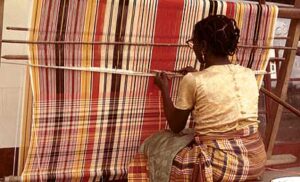
For Centuries, Akwete has remained one of Nigeria’s most treasured cultural assets. The indigenous handwoven fabric, produced mainly by skilled women artisans, represents the creativity, patience and cultural identity of the people of Akwete – Ndoki, Ukwa East LGA in Abia State.
The Craft has been passed down from generation to generation, with traditional weaving techniques preserved through family and community systems. The intricate patterns, symbolic designs and quality of Akwete cloth have earned admiration within Nigeria and the International Community.
However, despite its rich heritage and uniqueness, the industry has faced challenges including inadequate investment, poor infrastructure, limited access to modern technology, weak market structures and declining interest among younger generations.
The visit of Senator Oluremi Tinubu has therefore brought renewed national attention to Akwete and the urgent need to preserve, modernise and commercialise the craft.

Her announcement of a ₦2 billion intervention to expand and reposition the Akwete Weaving Industry marks a significant step towards transforming the ancient craft into a modern economic enterprise.
2.0 Economic Importance Of Akwete Fabric Products.
Akwete cloth is not only a cultural symbol; it is also an economic resource with enormous potentials for Economic Development.
The industry provides livelihoods for women weavers, traders, designers, tailors, suppliers of raw materials, transporters and other value-chain Participants. A stronger Akwete textile sector will directly improve household incomes and contribute to systemic poverty aliviation in the Society.

The First Lady’s intervention recognises that empowering women through enterprise development is an important pathway to economic growth. Increased production and better market access will enable more women to earn sustainable incomes, support their families and contribute meaningfully to community and socioeconomic development.
Beyond the weaving process, Akwete has the capacity to create thousands of jobs in fashion, tourism, marketing, digital commerce, packaging, export and creative industries.
The establishment of a modern weaving, production and research hub will encourage innovation, improve quality standards and enable Akwete fabrics to compete favourably with internationally recognised textiles such as Ghana’s kente, Indian silk and other global cultural products.
If properly developed, Akwete can become a luxury Nigerian textile brand that generates revenue, attracts investment and strengthens Nigeria’s presence in the global creative economy.
3.0 Boosting Economic and Commercial Activities in Akwete, Ukwa East LGA and Abia State Through The Visit of Nigerian First Lady, Sen. Oluremi Tinubu and Support of Abia State Government.
The First Lady’s visit has opened a new economic opportunity for Akwete, Ukwa East LGA and Abia State.
The promised ₦2 billion Intervention Fund from the Nigerian First Lady, Her Excellency, Sen. Oluremi Tinubu, and the unflinching support of Dr. Alex Otti’s led government, through the proposed Modern Integrated Weaving Production Hub, has the potential to transform Akwete from a traditional weaving community into a major textile and creative industry centre.
Improved production facilities, modern equipment, training programmes and stronger market networks will stimulate commercial activities within the area. Small businesses connected to the textile industry will experience growth, while young people may begin to see traditional crafts as viable career opportunities.
The development of Akwete as a cultural tourism destination could also create additional economic benefits. Visitors interested in experiencing indigenous craftsmanship could patronise local hotels, restaurants, transport services and markets, thereby expanding economic activities across Ndoki – Ukwa East and its Environs.
4.0 Necessary Partnerships For Promoting Akwete Fabric Products on The Global Market.
Abia State Governor, Dr. Alex Otti, has expressed commitment to partnering with the First Lady to establish a World-class Akwete Textile Production Hub. Such collaboration aligns with efforts to promote industrialisation, entrepreneurship and sustainable economic development in the state.
The role of Hon. Chris Nkwonta, member representing Ukwa East/Ukwa West Federal Constituency, is also significant. His commitment to complementing the First Lady’s intervention, stems from his earlier resolve to establish a State Of The Art Weaving Center in Akwete and ultimately, demonstrates the importance of legislative support in ensuring that the opportunity translates into lasting benefits for the Constituents.
His proposed support in areas such as infrastructure development, skills acquisition, entrepreneurship and market expansion will further strengthen the impact of the Initiative.
For Akwete to achieve global recognition, strategic partnerships will be essential.
Government Agencies, Private Investors, Fashion Designers, Universities, Research Institutions, Financial Organizations and International Development Partners must Collaborate to build a Sustainable and Viable Value Chain System for the emerging Market.
Partnerships with Nigerian and International Fashion Houses can introduce Akwete Fabrics to the Global Market and position them as Premium African Textiles.
Academic Institutions can collaborate through research and innovation, improving weaving techniques and developing new products while preserving the originality of the craft.
A strong branding campaign will also be necessary to tell the Akwete Story to the World and highlight its uniqueness as a Nigerian Cultural Treasure.
5.0 The Future of Akwete Fabric Products.
The future of Akwete cloth looks brighter following the renewed attention generated by Senator Oluremi Tinubu’s visit.
History may remember this intervention as the moment Nigeria recognised the economic value hidden within one of its oldest cultural treasures.
With effective implementation of the ₦2 billion support, combined efforts from government, private sector players, community leaders and stakeholders, Akwete can become Nigeria’s foremost indigenous textile brand.
The Industry has the potential to empower women, create jobs, attract tourists, increase exports and strengthen Nigeria’s creative economy.
The loom that has preserved Akwete’s history for centuries now carries the promise of weaving a new future; one defined by prosperity, innovation and global recognition for Ukwa East LGA, Abia State, the South-East and Nigeria.
By Dr. Chidi Nwankpa, fnimn, mnipr.
Second Vice President, National Institute of Marketing of Nigeria (Chartered).
Copyright © EaglesWatchOnline 2023 All rights reserved.
This material, and other digital content on this website, may not be reproduced, published, broadcast, rewritten or redistributed in whole or in part without written permission from EaglesWatchOnline.
