

The Foundation for Environmental Rights Advocacy and Development (FENRAD) has called on the Abia State Government to complement its ongoing infrastructure development with stronger attention to workers’ welfare, pension and gratuity obligations, institutional accountability and social protection.
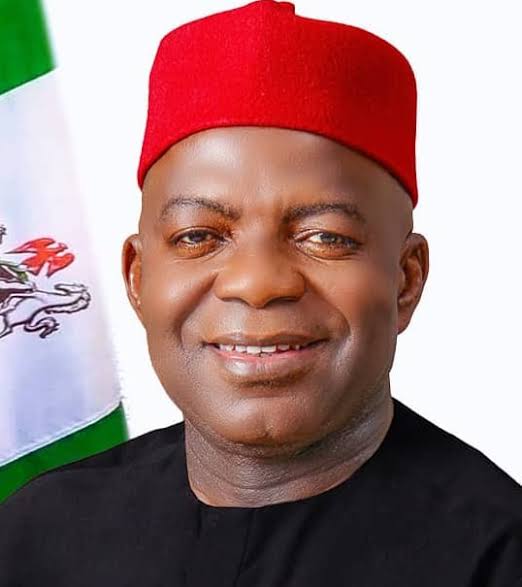
The Executive Director of FENRAD, Comrade Nelson Nnanna Nwafor, made the call while reviewing the administration of Governor Alex Otti, noting that the government’s investments in roads, urban renewal, connectivity and environmental improvement were visible and deserving of recognition.
He, however, stressed that infrastructure alone could not constitute the full measure of good governance.
According to him, government must also be assessed by how it treats workers, pensioners, retirees, vulnerable citizens and public institutions.
Nwafor said the longstanding pension and gratuity liabilities in the state predated the present administration, with successive governments contributing to the accumulation of the obligations.

He acknowledged Governor Otti’s position that government is a continuum and that inherited liabilities must ultimately be addressed.
He also commended the administration for undertaking verification exercises with pensioners and acknowledging the magnitude of outstanding retirement obligations.
However, he argued that acknowledgement must be followed by a clear, measurable and transparent settlement plan.
“Behind every naira owed in pension and gratuity arrears is a citizen who worked for the state and expected to receive the benefits attached to that service,” he said.
Nwafor noted that many affected pensioners were elderly citizens who had waited for years for their entitlements, adding that their situation should be treated as an issue of social justice and human dignity.
Current Payments and Historical Arrears
The FENRAD executive director urged the state government to distinguish between the payment of current pensions and the settlement of historical pension and gratuity arrears.
While describing regular payment of current pensions as commendable, he said such payments should not be presented as a substitute for clearing outstanding liabilities accumulated by previous administrations.
He called on the government to provide greater public disclosure on the matter, including the verified amount owed, number of beneficiaries, amount already paid, funds appropriated and projected timeline for clearing the backlog.
According to him, such transparency would strengthen rather than weaken public confidence in the administration.
Gratuity and Retirees’ Welfare
Nwafor further argued that gratuity should not be viewed merely as an accounting liability, stressing that for many retirees, the payment represents the financial security expected after decades of public service.
He recalled that Abia pensioners had publicly protested over unpaid benefits before the present administration came into office, stressing that the problem therefore predates the Otti administration.
He maintained, however, that the transfer of responsibility from one administration to another did not extinguish the state’s obligation to legitimate beneficiaries.
“Inheritance may explain a liability; it does not extinguish it,” he stated.
ABSU Controversy
The FENRAD boss also called for an objective review of the controversy surrounding Professor Nnamdi Nwaeze of Abia State University (ABSU), who reportedly raised concerns over salary structures, deductions, earned allowances, promotion-related benefits and other staff welfare issues.
He acknowledged that public servants were bound by rules regulating their conduct and that the university and government had the right to apply established disciplinary procedures where necessary.
He, however, cautioned that disciplinary action should not overshadow the substantive issues raised.
“The important question is not only whether Professor Nwaeze breached a rule, but also whether the concerns he raised are true or false,” he said.
Nwafor advocated an independent review of the allegations, arguing that such a process would protect both the university management and the affected academic while ensuring that legitimate welfare concerns were properly addressed.
Call for Transparency on ASUU Issues
He also urged the Abia State Government and the university authorities to clarify issues surrounding the implementation of salary agreements and conditions of service involving the Academic Staff Union of Universities (ASUU), ABSU chapter.
According to him, the applicable remuneration framework should be clearly explained, particularly where national agreements are concerned.
He said government and university authorities should be able to provide records showing what is owed to workers, what has been agreed, what is legally required and what has actually been paid.
“Transparency protects everyone,” he added.
Older Citizens’ Stipend
Nwafor welcomed the proposed monthly stipend for older citizens, describing it as a potentially important social-protection intervention.
He, however, urged the government to explain how the programme would be financed and sustained alongside the settlement of inherited pension and gratuity obligations.
He stressed that both initiatives could operate simultaneously if properly planned and transparently funded.
“The elderly should not have to choose between a new welfare programme and benefits they have already earned through decades of service,” he said.
FENRAD Demands Liabilities Register
To promote accountability, FENRAD proposed that the Abia State Government establish and regularly publish an Inherited Liabilities and Social Obligations Register.
Nwafor said the register should provide details of verified pension and gratuity arrears, beneficiaries, amounts already paid, outstanding balances, budgetary provisions and projected payment schedules.
He said such a mechanism would enable citizens to distinguish between inherited liabilities, verified obligations, payments made and outstanding balances.
According to him, the initiative would also provide the Otti administration an opportunity to demonstrate that its commitment to addressing inherited obligations is backed by a clear and sustainable programme.
Infrastructure Must Go With Human Development
Nwafor stressed that the debate should not be framed as a choice between infrastructure and welfare, noting that Abia needed both.
He said the state required good roads, cleaner cities, improved connectivity and investment, but equally needed a government capable of assuring pensioners, workers and other citizens that their legitimate interests would not be overlooked.
He urged the administration to ensure that physical development advances alongside human development, institutional accountability and social protection.
“The essence of governance is not simply the ability to build. It is the ability to build, protect, account, respond and provide dignity to the people for whom government exists,” he said.
Nwafor maintained that the success of the “New Abia” should ultimately be measured not only by visible infrastructure but also by the credibility of public institutions and the welfare of the people.
He therefore urged the state government to move from acknowledging inherited liabilities to implementing a transparent, measurable and sustained programme for their settlement.
“Abia’s infrastructure matters. But so does the welfare of those who built Abia. Infrastructure is visible; good governance must be felt,” he said.
Copyright © EaglesWatchOnline 2023 All rights reserved.
This material, and other digital content on this website, may not be reproduced, published, broadcast, rewritten or redistributed in whole or in part without written permission from EaglesWatchOnline.
