
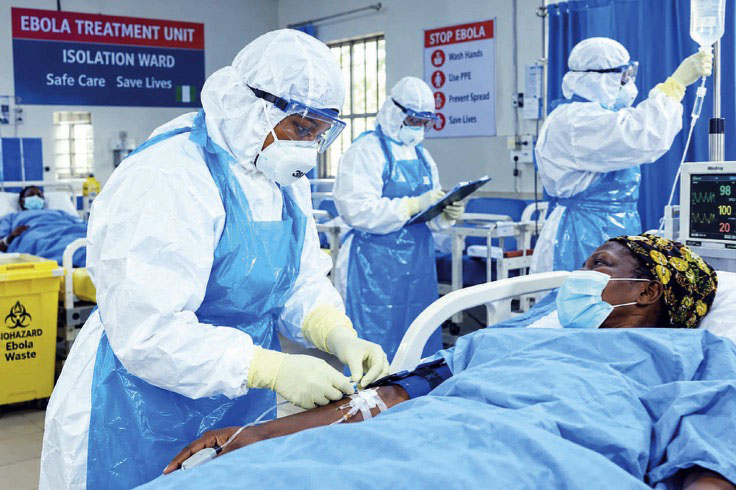

Fear, uncertainty and painful memories of Nigeria’s 2014 Ebola outbreak are resurfacing among Nigerians following confirmation of a new case, as the Federal Government intensifies measures to prevent the disease from spreading.
For traders, school administrators, healthcare workers and families, the development has raised concerns about public safety, access to reliable information and the possible disruption of daily activities if the situation escalates.
While the government maintains that there is no evidence of community transmission, Nigerians are calling for transparency, early public awareness campaigns and improved preparedness to prevent a repeat of the economic and social difficulties associated with the previous outbreak.
At a press briefing in Abuja on Thursday, October 22, the Coordinating Minister of Health and Social Welfare, Prof. Muhammad Ali Pate, disclosed that the infected patient was responding to treatment, with laboratory results indicating significant improvement.
According to the minister, the patient was asymptomatic on arrival in Nigeria but developed symptoms several days later. Following confirmation of the infection, health authorities commenced contact tracing involving people who might have been exposed through hospital attendance, domestic interactions and a visit to a private medical facility.
Pate said contacts were being managed according to their exposure levels, with high-risk individuals quarantined in a designated facility and others placed under monitoring in line with public health guidelines.
He added that there was no evidence of community transmission at the time of the briefing, stressing that the immediate priority was to contain the infection and prevent further spread.
Nigerians recall the pain of 2014
For some Nigerians, the latest development brings back memories of the economic hardship, fear and uncertainty that accompanied the previous Ebola outbreak.
A trader expressed concern that renewed public anxiety could affect businesses, particularly those involving food and other frequently handled goods.
“During the 2014 outbreak, we lost customers because people were scared to come to the market. If it is back, it means we will suffer again,” the trader said.
The trader called on the government to take public education to markets and other crowded places before fear spreads, adding that people needed clear information about the symptoms of the disease and where to report suspected cases.
A fitness coach said the capacity of hospitals and the availability of emergency services were major concerns.
Recalling the previous outbreak, the coach expressed frustration over recurring questions about the country’s preparedness whenever a public health emergency occurs.
The coach urged the government to communicate honestly with Nigerians and provide timely information to prevent rumours and unnecessary panic.
For a school owner and principal, the welfare of children remains a major concern.
The educationist recalled the anxiety experienced by parents and school administrators during the COVID-19 pandemic and the previous Ebola outbreak, warning that another health emergency could disrupt learning if schools were not adequately prepared.
The school administrator called for closer collaboration between the Ministries of Health and Education, alongside the provision of clear safety guidelines to schools.
A nurse who volunteered during the 2014 outbreak in Lagos said the current development had revived difficult memories of contact tracing and the stigma experienced by affected families.
Despite concerns about the capacity of health facilities, the nurse expressed confidence that prompt reporting and strict adherence to safety protocols could help contain the infection.
The nurse stressed that people should not conceal suspected cases out of fear or embarrassment, noting that early intervention remained essential to preventing further transmission.
FG mobilises health agencies, states
In response to the confirmed case, the Federal Government has activated a coordinated emergency response involving the Nigeria Centre for Disease Control and Prevention (NCDC), state governments, hospitals and international health partners.
Pate identified the NCDC as the focal point for coordinating surveillance, contact tracing, laboratory investigations, clinical management and other response activities.
He said the government had briefed the Nigeria Governors’ Forum and the National Economic Council, while state governments were being encouraged to strengthen their preparedness plans.
The World Health Organisation, Africa Centres for Disease Control and Prevention, development partners and experts with experience in Ebola management are also supporting the response.
The government is further strengthening surveillance at airports and other points of entry, ensuring that screening equipment is functional and that travellers are assessed according to relevant public health risks.
Hospitals have been directed to prepare isolation facilities, strengthen infection prevention and control measures, and promptly report suspected cases.
Pate also urged private healthcare providers to maintain close contact with public health authorities, noting that the patient’s visit to a private medical facility before confirmation of the infection highlighted the importance of early reporting.
N10bn preparedness fund raises questions
The government’s response has also drawn attention to the N10 billion approved by President Bola Tinubu in June for Ebola preparedness and other emerging public health threats.
The Presidential Task Force on Ebola Virus Disease Preparedness and Emerging Public Health Threats, chaired by the Chief of Staff to the President, Femi Gbajabiamila, was established to strengthen Nigeria’s capacity to detect and respond to potential outbreaks.
Its planned interventions included enhanced screening at international airports, improved surveillance along high-risk routes and the activation of referral and isolation centres.
However, questions have emerged over the status and utilisation of the approved funds following confirmation of the latest case.
A statement attributed to the APC Presidential Campaign Council reportedly claimed that the money remained untouched, although the report did not provide financial records independently establishing the fund’s status.
With the government now intensifying containment efforts, greater transparency regarding the release, deployment and utilisation of emergency funds could help strengthen public confidence in the response.
No general ban on public gatherings
The Federal Government has not announced a general ban on political rallies, conferences or other major public gatherings.
Pate said the decision could be reviewed if the public health situation deteriorated, emphasising that the government would continue to assess the risk as investigations progressed.
He explained that Ebola is primarily transmitted through direct contact with the blood or other body fluids of an infected person who is showing symptoms, or through contaminated materials.
Although crowd size alone does not determine the risk of transmission, the minister urged event organisers and members of the public to maintain good hygiene and follow official health advice.
He also cautioned against politicising the outbreak, describing public health as a shared concern that transcends political, ethnic and religious divisions.
Doctor calls for urgent preventive action
A medical doctor in Lagos called for immediate and coordinated preventive measures across hospitals, clinics and primary healthcare centres.
The doctor recommended prompt assessment of people with suspected symptoms and relevant exposure histories, immediate isolation where indicated, and timely reporting to public health authorities.
The physician also emphasised the importance of handwashing facilities, proper infection prevention procedures, safe handling of medical equipment and specialised training for burial teams.
Nigerians were urged to avoid contact with the blood and other body fluids of suspected or confirmed cases and not to handle the remains of suspected Ebola victims without trained professionals.
Public cooperation remains critical
The government has urged Nigerians to remain calm but vigilant, wash their hands regularly with soap and running water, and avoid contact with other people’s body fluids.
Anyone who develops symptoms such as fever, headache or muscle aches, particularly after possible exposure, should promptly contact public health authorities for guidance.
People identified as contacts have also been advised to comply with monitoring, isolation or quarantine instructions.
The government has warned that misinformation and unsubstantiated claims could undermine containment efforts by discouraging people from reporting symptoms or cooperating with contact tracers.
For Nigerians who remember the fear and disruption of 2014, the priority is clear: prevent the current case from becoming a wider outbreak through timely information, effective healthcare services and decisive public action.
As the response continues, the government’s ability to contain the infection will depend not only on the readiness of health institutions but also on public trust, transparent communication and cooperation from communities across the country.
Copyright © EaglesWatchOnline 2023 All rights reserved.
This material, and other digital content on this website, may not be reproduced, published, broadcast, rewritten or redistributed in whole or in part without written permission from EaglesWatchOnline.
